Industry: healthcare · March 25, 2026
ADA Compliance for Small Medical Offices: Exam Tables, Portals, and Interpreters
Where do small medical practices fail ADA compliance?
The three biggest gaps we see: non-adjustable exam tables, inaccessible patient portals, and missing sign-language interpreter workflows. Each is a recurring DOJ enforcement priority and each is fixable without breaking the bank.
Healthcare settings have ADA obligations most practices quietly violate. Part of the reason is that the ADA requirements for a medical office intersect with HIPAA, the Affordable Care Act's Section 1557, and state public-health regulations — practices that comply with the medical rules often assume they have ADA covered. They usually do not.
The exam table problem
DOJ guidance under Title III treats an exam table as a place where "equal enjoyment of goods, services, facilities, privileges, advantages, or accommodations" happens. A non-height-adjustable exam table means a wheelchair user may have to be transferred — or may simply receive a lesser standard of examination, often from a seated position.
At least one height-adjustable exam table should be available in each specialty that routinely examines patients in a supine or prone position. Typical cost: $2,500–$6,500 for a motorized model that lowers to ~17 inches. A practice that does only consult-style visits (psychiatry, some primary care subspecialties) may have less stringent needs but should still document the analysis.
The scale problem
Standard medical scales require the patient to step on a platform. A wheelchair user cannot. Accessible scales — either roll-on platform scales or weight-bearing chair scales — are a frequent DOJ citation and a straightforward fix. Cost: $1,500–$4,000. Many practices keep one for the whole office rather than one per exam room.
Sign-language interpreters
Under Title III, a medical practice must provide auxiliary aids and services for effective communication — and for deaf and hard-of-hearing patients, that often means a qualified sign-language interpreter. Three things to know:
- You cannot require the patient to bring their own interpreter.
- A family member is not a "qualified interpreter" under the ADA for anything beyond routine visits.
- Video Remote Interpreting (VRI) is acceptable for many encounters but not all — complex mental-health sessions, emergencies, and young children often need in-person interpretation.
The cost of an interpreter for a single visit ($75–$300) is almost always lower than the cost of failing to provide one. Practices should have a written interpreter-services policy and a pre-vetted vendor relationship before the need arises.
Patient portals and websites
Your patient portal — whether built in-house, provided by your EHR vendor, or a third-party add-on — is subject to Title III if the practice is a public accommodation. Common violations:
- Login forms without labels associated to inputs
- Appointment calendars that cannot be operated by keyboard alone
- Lab-result displays that encode severity with color alone
- PDF forms (intake, consent) that are scanned images, unreadable to screen readers
If your portal is provided by a vendor, your contract probably does not transfer ADA liability. You need to audit what they serve to your patients.
Physical-space basics
Same as any other public accommodation: parking, entry, routes of travel, restrooms, signage, and check-in counter height. The checklist on our compliance checklist applies here too. A few medical-specific additions:
- Private exam and consult rooms need enough floor clearance for a wheelchair turn — typically 60-inch diameter
- Reception check-in counters need a low section (36 inches high) or an alternative service method documented in staff training
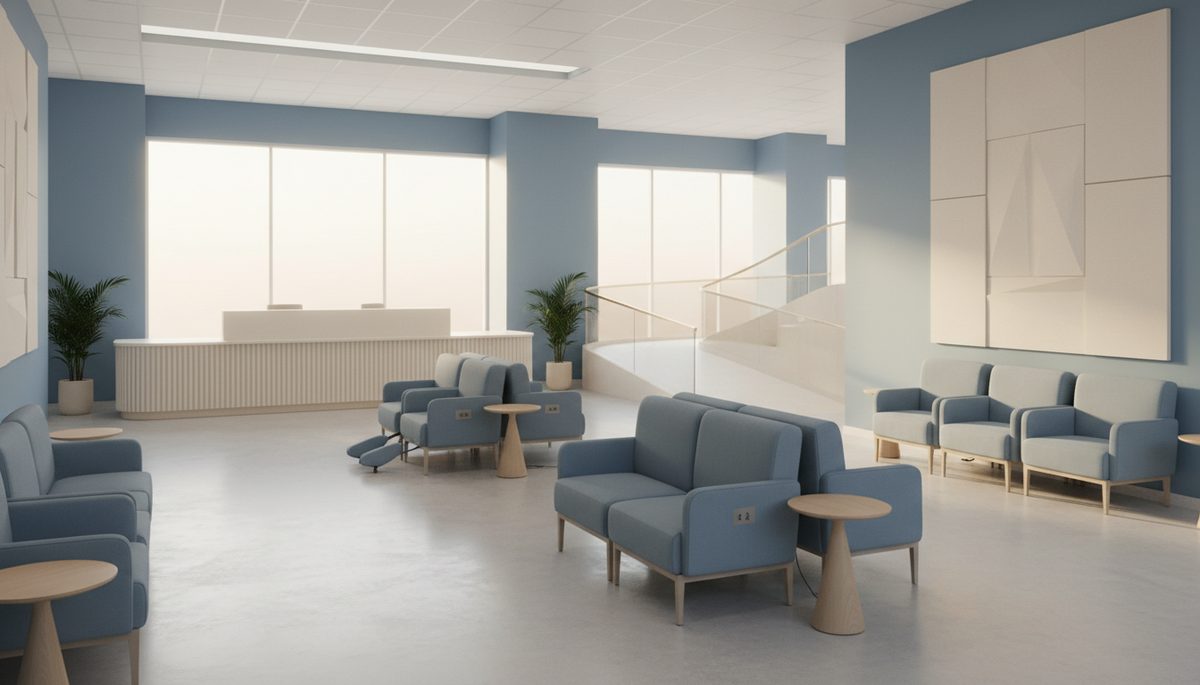
- Waiting-room seating should include at least one space for a wheelchair user, not just wheelchair-adjacent seating
Cost benchmarks for the full remediation
- CIAC audit (physical + digital): $3,500–$8,000
- Height-adjustable exam table: $2,500–$6,500 each
- Accessible scale: $1,500–$4,000
- Interpreter-services vendor retainer: $0 upfront, per-visit fees
- Portal accessibility remediation (vendor-negotiated or third-party): $3,000–$25,000 depending on scope
The Section 44 tax credit covers half of eligible expenses up to $5,000 annually — a meaningful offset for a small practice.
ADA compliance updates, in your inbox
New posts, DOJ guidance, and lawsuit trends. No spam. One-click unsubscribe.